How Docket's Multi-Agent Architecture Upgrades Every Stage of Your GTM Motion
May 8, 2026




We started with an AI marketing agent—a product concierge for your website. It engaged visitors, answered tough product questions, ran discovery, qualified leads, and booked meetings.
The results? Higher conversion. Faster pipeline. And meetings that actually showed up qualified.
But then customers started asking questions we hadn’t expected:
“Can we use this for partner enablement?”
“Could we run different messaging for enterprise vs SMB?”
“Can this agent become our ‘Voice of the Customer’?”
That’s when it clicked: Our agent wasn’t just good at one thing. It was good at many things, if we allowed it to specialize.
So we opened the door.
Docket is the Agentic Marketing platform for B2B revenue teams. Its AI Marketing Agent opens a real conversation, answers from your approved product knowledge, qualifies intent in real time, and delivers an AQL to your rep.
The multi-agent architecture extends that motion across every audience, region, and product line in your GTM motion, from a single governed knowledge foundation. This post explains how it works, where it applies, and what it produces.
A single agent can be configured for one audience, one qualification framework, one set of approved knowledge, and one routing logic. When your GTM motion is simple, that is sufficient.
The moment your motion becomes more complex, the single-agent model creates a choice: build one agent that tries to handle every scenario and becomes generic at all of them, or build separate agents and rebuild the knowledge layer for each one from scratch.
Neither option is good. Generic agents produce lower conversion and weaker qualification. Rebuilding the knowledge layer for every new agent means the second and third agents cost almost as much as the first to deploy and govern.
Docket's multi-agent architecture removes that tradeoff. Every agent you add draws from the same Docket Sales Knowledge Lake: the single governed source of truth that unifies your product docs, pricing, security material, call recordings, and enablement content. You partition the knowledge each agent can access and configure its behavior independently. The knowledge layer does not get rebuilt. The governance layer does not get fragmented.
With Docket's multi-agent architecture, you aren’t just tweaking a few lines of copy. You’re shaping how each agent thinks. You’re defining:
When you deploy a fleet of specialized agents, you start seeing:
The kind of numbers that show up in board decks.
A multi-brand industrial supply company deployed four AI Marketing Agents across four distinct brands, all running from one shared intelligence layer. The result was 37,383 visitors engaged across the portfolio, with each agent specialized for its brand's buyer, its product line, and its qualification criteria.
"Docket gave us something we've never had before: real-time visibility into what buyers across all four brands are actually asking for. We even uncovered an entirely new segment: police departments looking for evidence storage." - Digital Strategy Leader, a multi-brand industrial supply company
The architecture has five layers that stay consistent across every agent you deploy.
The practical implication: adding a second or fifth agent does not mean starting from zero. The Sales Knowledge Lake is already built. The governance layer is already configured. Each new agent is a specialization of that foundation, not a new deployment.
These are the five use cases that drive the most measurable GTM impact for B2B revenue teams. Each maps to a specific audience, moment, and outcome.
Your highest-intent buyers arrive on your website outside business hours, ask real product questions, and leave when they get a form. The inbound AI Marketing Agent runs the full buyer engagement motion: answering from approved knowledge, qualifying intent using your criteria, booking the meeting, and syncing a full AQL to your CRM before your team opens Slack.
What the agent does:
What it produces:
23 meetings in 2 weeks at a B2B marketing analytics company, 5.3x their baseline conversion rate
77% of those conversations happened outside business hours
Landing pages are built for one job: turn attention into action. A generic agent cannot optimize every campaign page. A landing page AI Marketing Agent is configured specifically for the campaign that brought the visitor in: matching the offer, the audience segment, and the qualification criteria for that traffic source.
What the agent does:
What it produces:
28.2% meeting book rate at a B2B data governance company, 5.6x above their baseline
+12.1 pp week-over-week improvement in conversion rate in the same deployment
Whether you sell into healthcare, manufacturing, fintech, or across multiple geographies, your buyers need conversations that reflect their industry context, their compliance requirements, and their evaluation criteria. A generic agent produces generic answers. A vertical or region-specific agent is configured with the knowledge, qualification logic, and tone that fits that audience precisely.
What the agent does:
What it produces:
A fintech infrastructure provider deployed one AI Marketing Agent and surfaced 40-plus engaged visitors across six LATAM countries including Mexico, Colombia, Argentina, Peru, Ecuador, and Brazil in 30 days. That regional demand was effectively invisible before the agent ran.
Multi-product companies and those with recently acquired brands face a specific problem: one agent cannot represent multiple product lines without producing confused, mixed, or incorrect answers across divisions. Docket's multi-agent architecture lets you deploy a separate AI Marketing Agent for each product line or brand, each drawing from partitioned knowledge, each with its own qualification logic and routing rules, all from one platform.
What the agent does:
What it produces:
4 agents deployed across 4 brands by a multi-brand industrial supply company, from one shared intelligence layer
83.9% meaningful conversation rate on the FillingSupplies brand, with 4.6-minute average session depth
For companies with a product-led motion, the biggest conversion problem is getting free users or trial accounts to their first value moment before they churn. Support and CS teams cannot manually guide every user through activation. A PLG onboarding agent guides users through the product, answers feature questions, identifies expansion triggers, and routes upgrade-ready accounts to sales automatically.
What the agent does:
What it produces:
A B2B AI sales intelligence company deployed one AI Marketing Agent on their website and logged 757 real buyer evaluation conversations in 30 days, with visitors spending over 15 hours actively engaging. The agent surfaced mid-funnel intent that had previously been invisible in their analytics.
Three things never change regardless of how many agents you deploy or how differently each one is configured.
Every agent answers from the same Docket Sales Knowledge Lake. When you update your pricing, add a security document, or revise a product page, that update propagates to every agent that has access to that knowledge slice. You do not update five separate agent knowledge bases. You update one.
Qualification guardrails, escalation triggers, and approved knowledge boundaries are configured once and enforced across every agent. No agent improvises. No agent goes off-script. When a question falls outside the approved knowledge scope, every agent follows the same escalation path: route to a human with full context.
Every agent produces the same output format on qualification: an Agent-Qualified Lead with documented intent, qualification status, pain points surfaced, and next steps defined. Your CRM receives consistent structured data regardless of which agent produced the conversation. RevOps gets clean, comparable data across every audience, region, and product line.
Here’s how it works behind the scenes:
Every agent you create draws from the same centralized source of truth: the Docket Sales Knowledge Lake™ (SKL). All your product docs, sales decks, call transcripts, pricing sheets, competitive intel, technical specs, security documents…everything lives here.
But here’s the key: You decide who sees what.
Each agent gets access to only the content it needs. You’re assigning slices of your SKL to each agent so they operate with the right level of expertise.
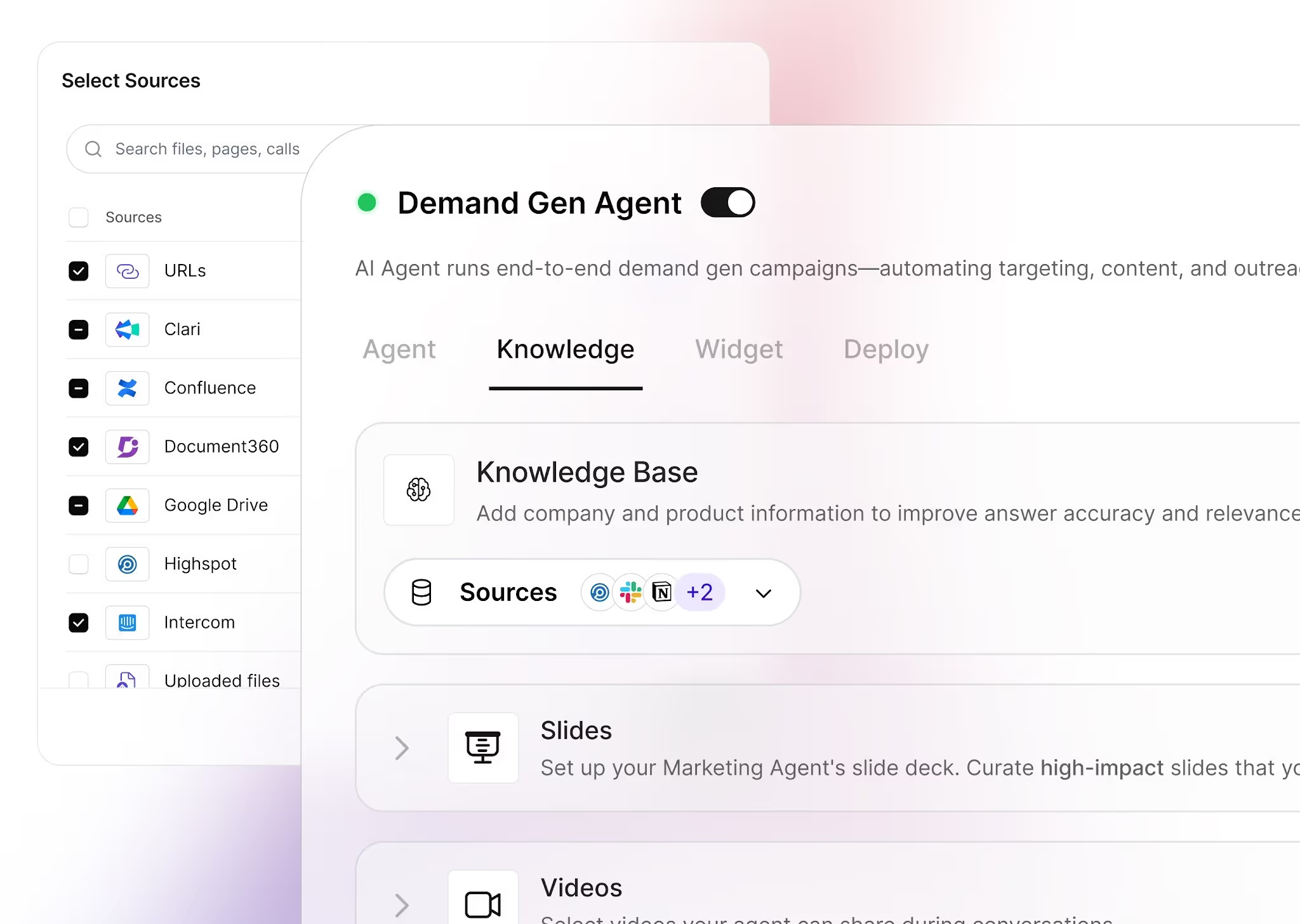
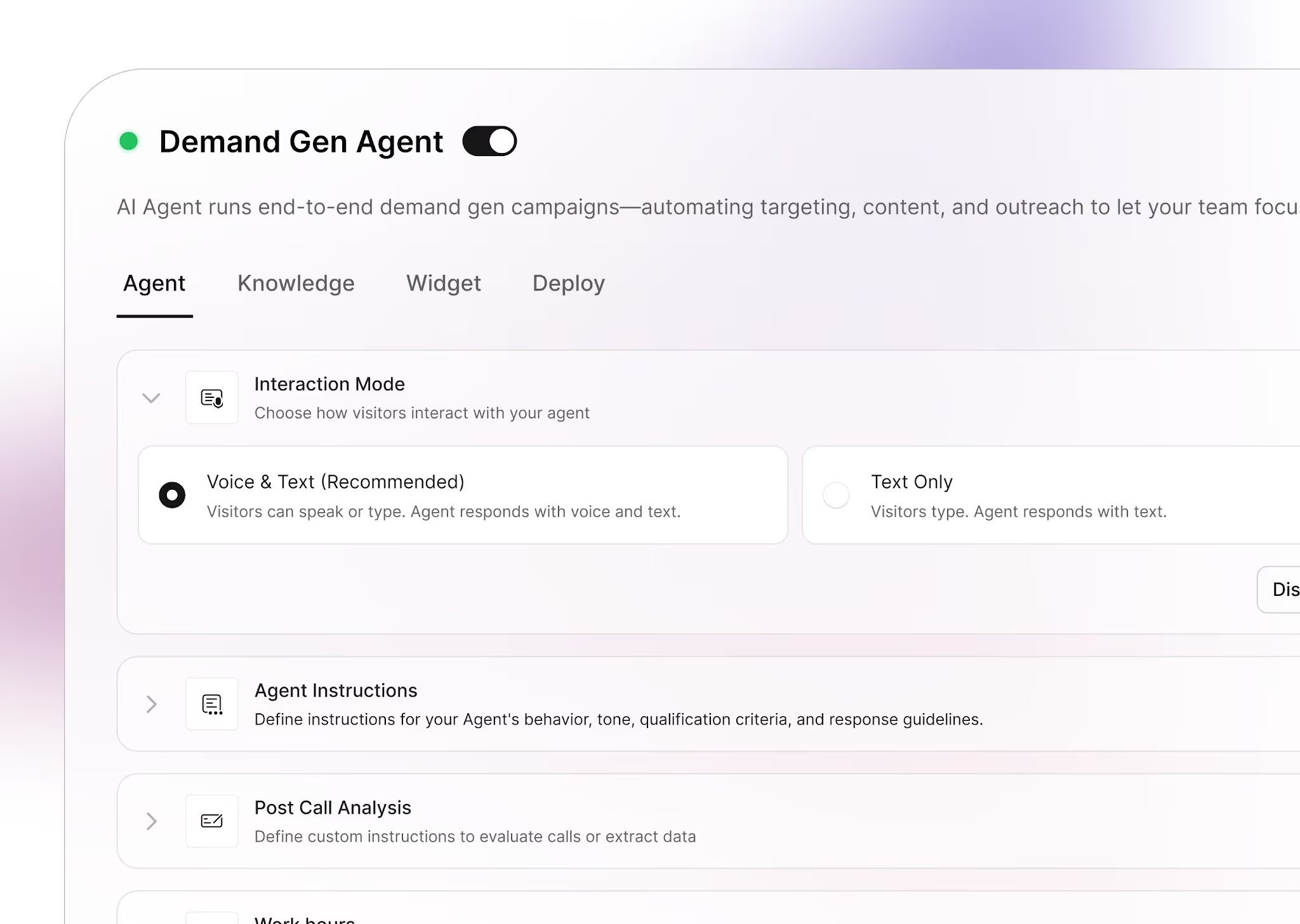
Every agent gets its own “personality and workflow,” defined through:
This is where one agent becomes your enterprise seller and another becomes your tier-1 support concierge.
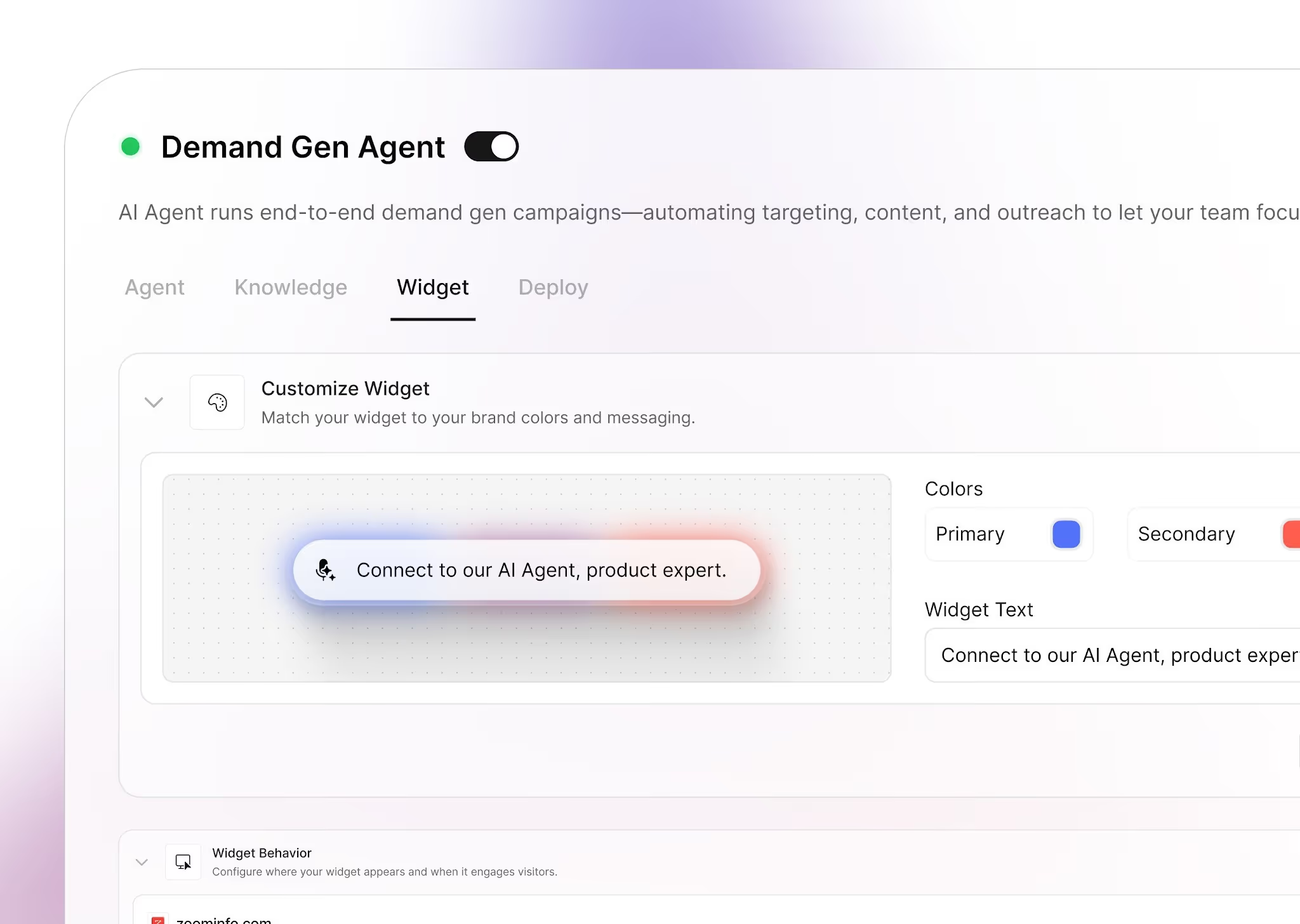
Every agent gets its own appearance:
Your partner-facing agent can look like your partner portal while your marketing agent can look conversion-optimized and on-brand.
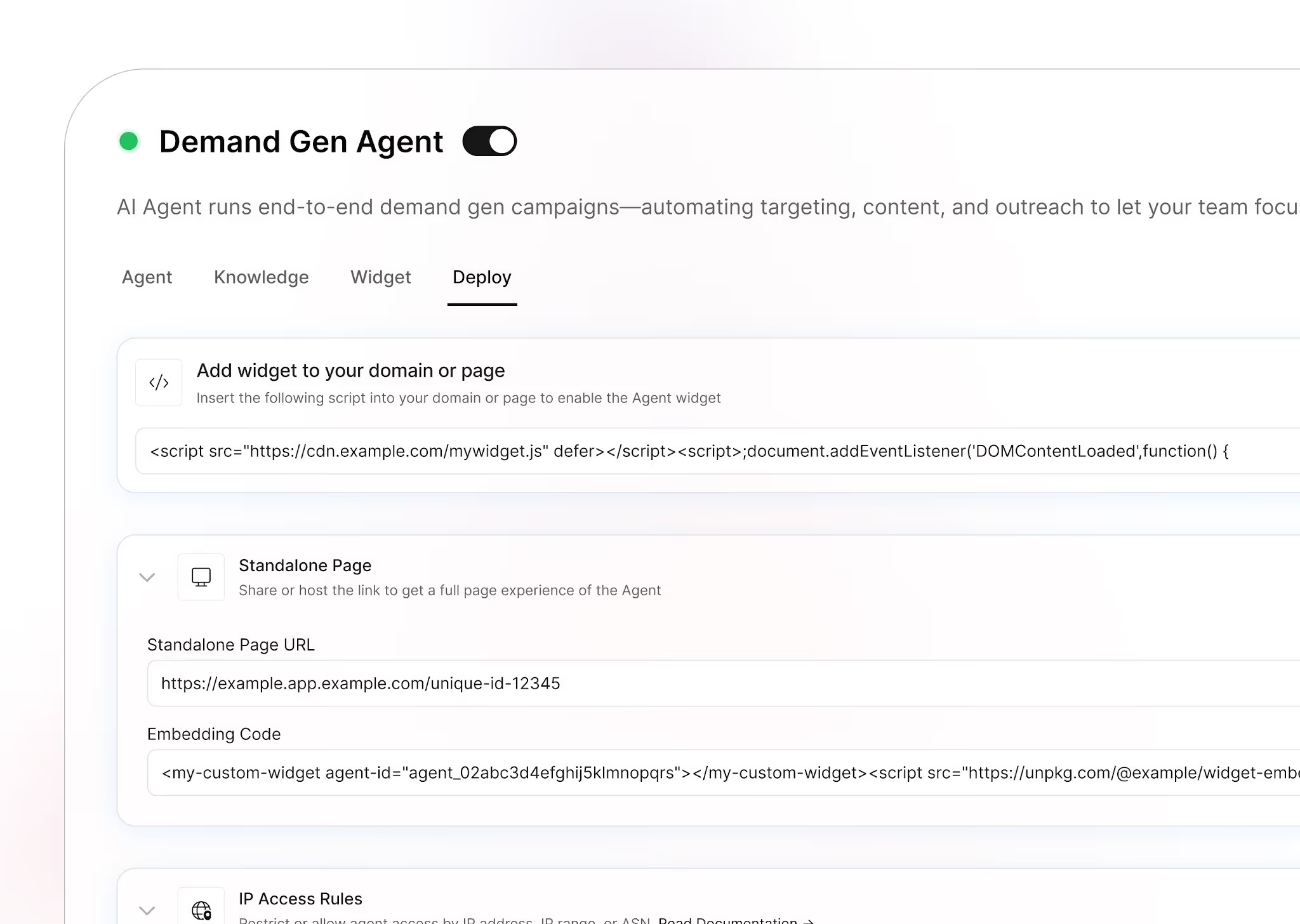
Once an agent is configured, you can drop its script anywhere:
Every agent can be also deployed as an overlay or an embeddable in any of the existing web properties.
Each agent can trigger different outcomes based on its role:
Docket deploys in 1 to 2 weeks. Most teams start with the inbound AI Marketing Agent and expand into additional agents as the use cases become clear. The knowledge layer you build for the first agent powers every one that follows.
Book a demo now!