What is an Agent Qualified Lead (AQL)?
May 26, 2026



An Agent Qualified Lead (AQL) is a lead qualified by an AI agent during a live conversation with the buyer. The agent works through four criteria in real time: use case, constraints, objections, and next step. Docket coined the term in May 2026, and the AQL replaces the MQL as the primary handoff to sales.
Here's why that matters.
Your SDR gets a lead. Name, company, email. Three pricing page visits. One whitepaper download. They call. The buyer has no memory of downloading it. The call goes nowhere.
That is not a qualification failure. That is a measurement failure. The MQL told you a buyer was interested. It could not tell you what they actually wanted, whether they had budget, or whether they were the right person to talk to. The signal was inferred. The intent was never confirmed.
The AQL fixes that at the source.
This post defines the AQL, explains why it produces fundamentally different pipeline signal than an MQL, and shows what it takes to produce one from your existing website traffic.
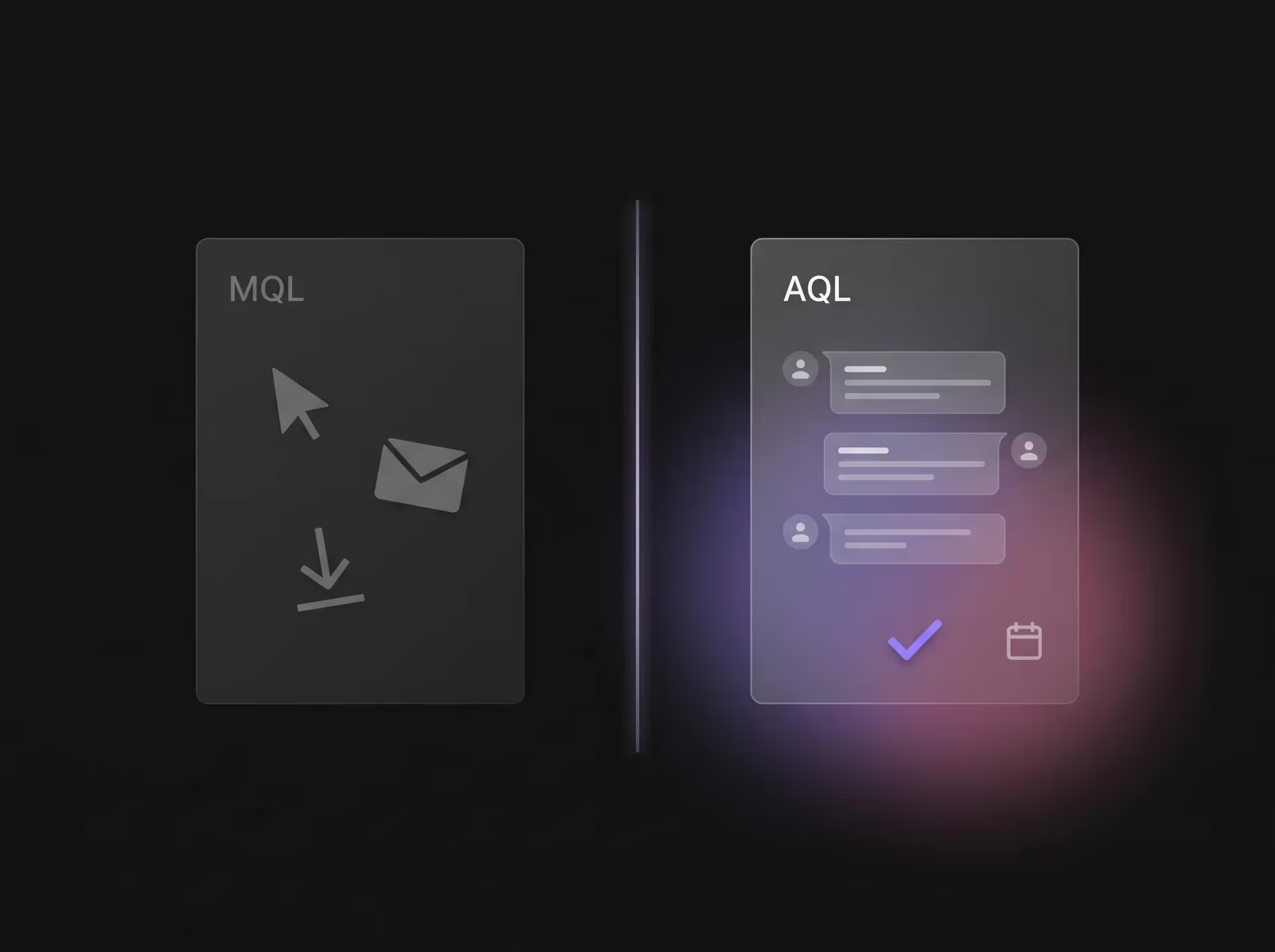
A contact who has crossed a behavioral score threshold set by the marketing team. Intent is inferred from clicks and page visits.
An MQL that a sales rep has reviewed and accepted as worth pursuing. Qualification happens after handoff. The key difference: MQLs and SQLs qualify the lead after the buyer interaction. AQLs qualify during it.
A lead produced from a structured, AI-led conversation in which a buyer has articulated their intent, been matched against defined ICP criteria, and produced a documented qualification record, in real time, inside a single interaction.
The term was coined by Docket. See the glossary entry.
Before the definition, the boundary.
An AQL is not:
The distinction matters because "AI-qualified lead" is being used loosely across the market. An AQL has a specific definition with specific criteria. If those criteria aren't met, it's a better MQL at best.
An AQL is built on four outcomes, all reached inside the conversation and before the handoff. A lead qualifies as an AQL when at least three of the four are complete and the buyer has explicitly asked for a next step.
1. Use Case Clarity: The buyer has confirmed what they are trying to solve. Not a category problem, but their specific scenario. "We need better inbound qualification" is not Use Case Clarity. "We have 8,000 monthly website visitors, a two-person SDR team, and a 1.2% demo conversion rate, and we need to qualify the buyers who arrive outside business hours" is.
2. Constraints Identified: The real-world limitations that will determine whether a deal closes: budget range, decision timeline, tech stack, compliance requirements, and approval process. These don't need to be resolved. They need to be surfaced. A buyer who says "we'd need this to integrate with Salesforce and have SOC 2 before our security team would approve it" has identified their constraints. That's an AQL signal.
3. Objections Surfaced: The concerns the buyer has that, left unaddressed, will cause them to disengage. An objection surfaced in a qualification conversation is an objection the rep can prepare for. An objection that surfaces on the third call, after the buyer has already been half-won, is a pipeline risk.
4. Next Step Defined: The buyer knows what happens next and has explicitly asked for it. "Sure, send me some info" is not a next step. "Let's book a 30-minute call with your enterprise team. I want to understand the governance layer before I bring this to my CTO" is.
The short version: an MQL is inferred from behavior after the fact, while an AQL is qualified from what the buyer said during the conversation. Here's where each metric fits in 2026.
This is the architectural difference.
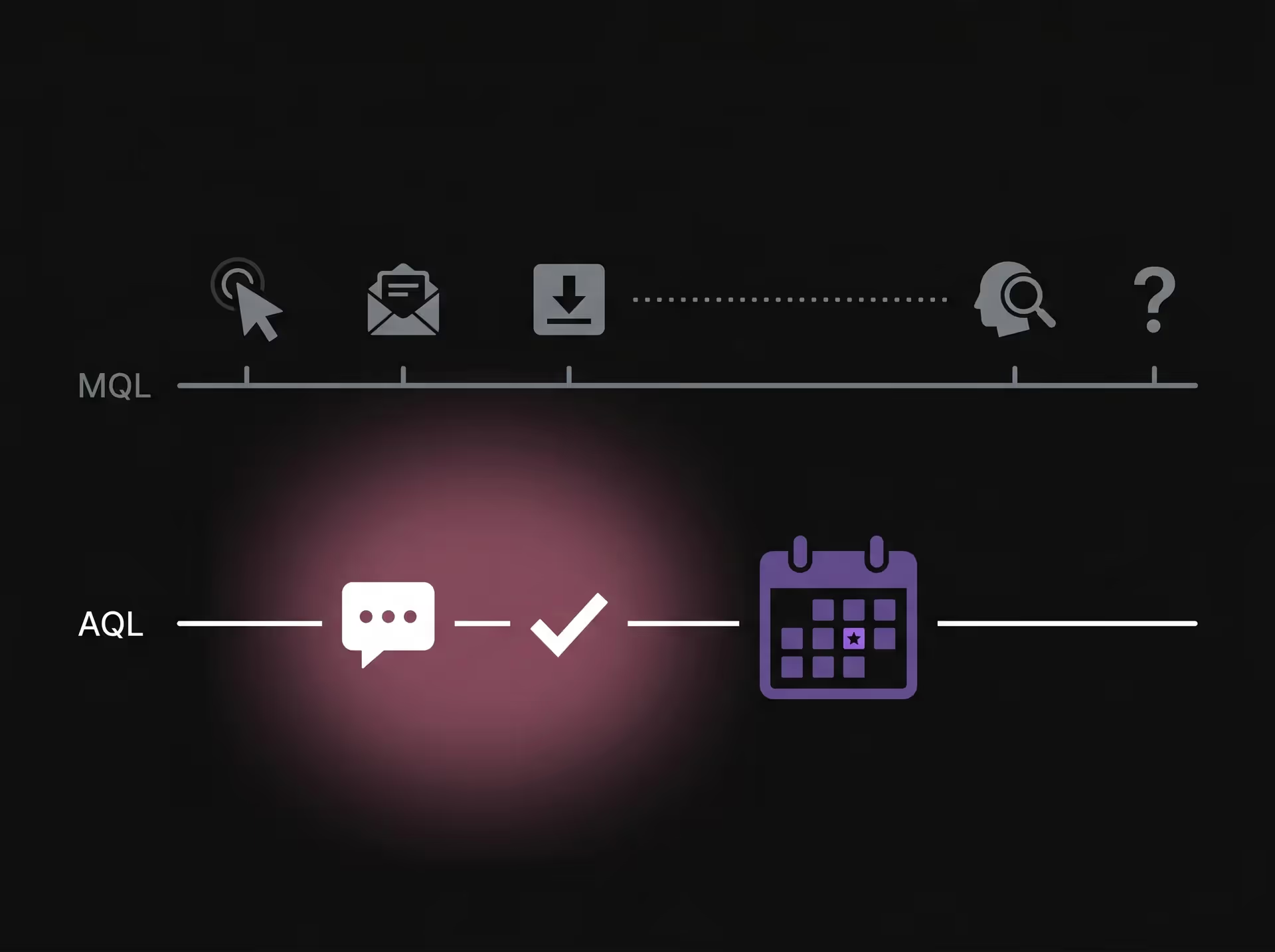
An MQL's qualification is constructed after the behavioral event. The buyer visits a page, the scoring model updates, a human reviews the record later. The buyer is never in the room for their own qualification.
An AQL's qualification happens during the conversation. The buyer is actively present. They answer questions, clarify constraints, raise objections. The qualification record reflects what they actually said and not what the model inferred from their click pattern.
That's why AQLs convert at a different rate. The rep isn't starting from an inference. They're starting from a documented conversation. The buyer has already done the work of articulating why they're a fit or why they're not.
When an AQL is produced, the rep receives a structured record synced to CRM. It contains:
The first call begins from this record. Not from zero.
One buyer arrived on a Docket sales call and opened with: "Skip the front end. I've already seen it. Show me the back end." Use Case Clarity was done before they reached the website. The agent completed the remaining criteria. By the time a human got involved, the buyer was ready for a technical evaluation. The rep didn't need to re-qualify. They needed to close.
Three things need to be in place:
Docket deploys in one to two weeks. The knowledge foundation, qualification criteria, and CRM sync are configured during onboarding, not after months of implementation.
AQLs don't just produce better leads. They surface funnel intelligence the MQL model never could.
One B2B data governance company ran 62 AQL conversations in a two-week window. 56% of those conversations identified buyers at the awareness stage rather than the decision stage. That's funnel intelligence the team had never had visibility into. Their Enterprise Marketing Leader noted: "We now know which integrations are our strongest buying signals and where prospects stall in the funnel."
An MQL would have scored those buyers low: one visit, one interaction, early stage. An AQL captured what they were actually there to understand. That's the difference between a metric and a signal.
For the full breakdown of why the MQL model couldn't capture this: Why MQLs Don't Convert to Pipeline: 5 Structural Causes
See what your website would produce if it could actually qualify. Talk to the Docket Marketing Agent at www.docket.io
What does AQL stand for?
AQL stands for Agent Qualified Lead. It's a lead an AI agent has qualified in a live conversation with the buyer, not one scored from page views, downloads, or email opens.
Who coined the term Agent Qualified Lead?
Docket coined the term Agent Qualified Lead and published its definition in May 2026.
What's the difference between an AQL and an MQL?
An MQL is inferred from behavioral signals after the fact. An AQL is qualified during the conversation, from what the buyer actually said: their use case, constraints, objections, and the next step they asked for.
What's the difference between an AQL and an SQL?
An SQL is confirmed by a sales rep after the handoff. An AQL arrives at the rep already qualified, with a context card that holds the buyer's use case, constraints, objections, and agreed next step.
What are the criteria for an AQL?
There are four: Use Case Clarity, Constraints Identified, Objections Surfaced, and Next Step Defined. A lead is an AQL when at least three are complete and the buyer has explicitly asked for a next step.
Is AQL an industry standard?
AQL is Docket's defined standard for qualifying leads in conversation. It's a newer term than MQL or SQL, and Docket publishes the criteria so any team can measure AQLs against the same definition.