Your Demo-to-Traffic Ratio Is the Most Important Metric You Aren't Tracking
March 5, 2026




It is a simple question, but for most B2B marketing leaders, the answer is either unknown or alarmingly low. While teams obsess over traffic volume, MQLs, and ad spend, the single most important conversion metric — the actual rate at which anonymous visitors become qualified meetings — is often ignored. The uncomfortable truth: for the average B2B SaaS company, this number is just 1.7%.
That means for every 1,000 visitors you drive to your site, 983 leave without ever talking to your sales team. This is not a small leak. It is a firehose of lost pipeline. Companies are spending billions on digital ads to attract buyers, only to funnel them to websites that convert just 2.35% of visitors through static forms, a number that drops to 1-3% for most B2B landing pages specifically.
It is not a traffic problem. It is a conversion problem. And it is rooted in a 2010-era playbook that no longer matches how modern B2B buyers operate.
"The dirty secret of B2B marketing is that we're measuring the wrong things. We celebrate traffic growth while our actual demo-to-traffic ratio is abysmal. The bottleneck isn't the top of the funnel; it's the front door. We're still asking our highest-intent buyers to stand in a digital line and fill out a form, and it's killing deals before they even begin."
— Arjun Pillai, CEO of Docket
The reliance on forms is a relic from a time when capturing an email was the primary goal. Today's buyers are self-sufficient researchers who expect immediate answers and frictionless experiences. The website has not kept up.
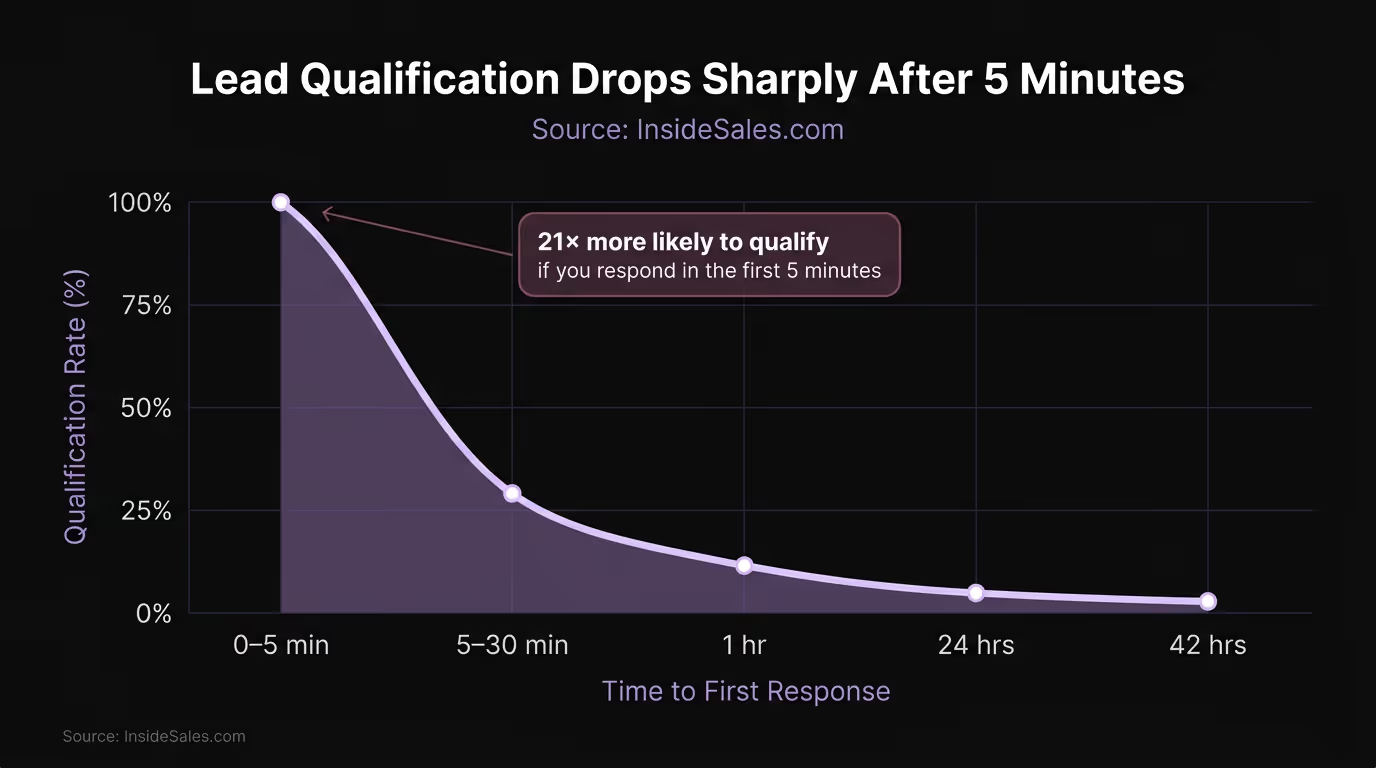
According to 6sense's 2024 Buyer Experience Report, B2B buyers complete nearly 70% of their purchasing process before engaging a vendor, and more than 80% of the time they initiate first contact themselves. By the time a buyer lands on your website, they are not at the start of their journey. They are near the end of it.
The pricing page is where this breakdown is most costly. It is the highest-intent page on your entire website and also the one most likely to send a ready buyer into a dead end. We broke down exactly why that happens and what it costs you here.
The solution is not more traffic. It is a better conversion architecture — replacing the static, one-way form with a dynamic, two-way conversational experience. This is precisely why we built Docket's AI Marketing Agent.
Docket's AI Marketing Agent is not a chatbot. Chatbots follow rigid, pre-programmed scripts and break the moment a buyer asks something unexpected. The AI Marketing Agent is an agentic AI that reasons, adapts, and acts, holding human-quality, scenario-led conversations that go beyond FAQ-style answers into actual evaluation questions: "How does this integrate with our existing Salesforce setup?" or "Does your security model meet SOC 2 Type II requirements?"
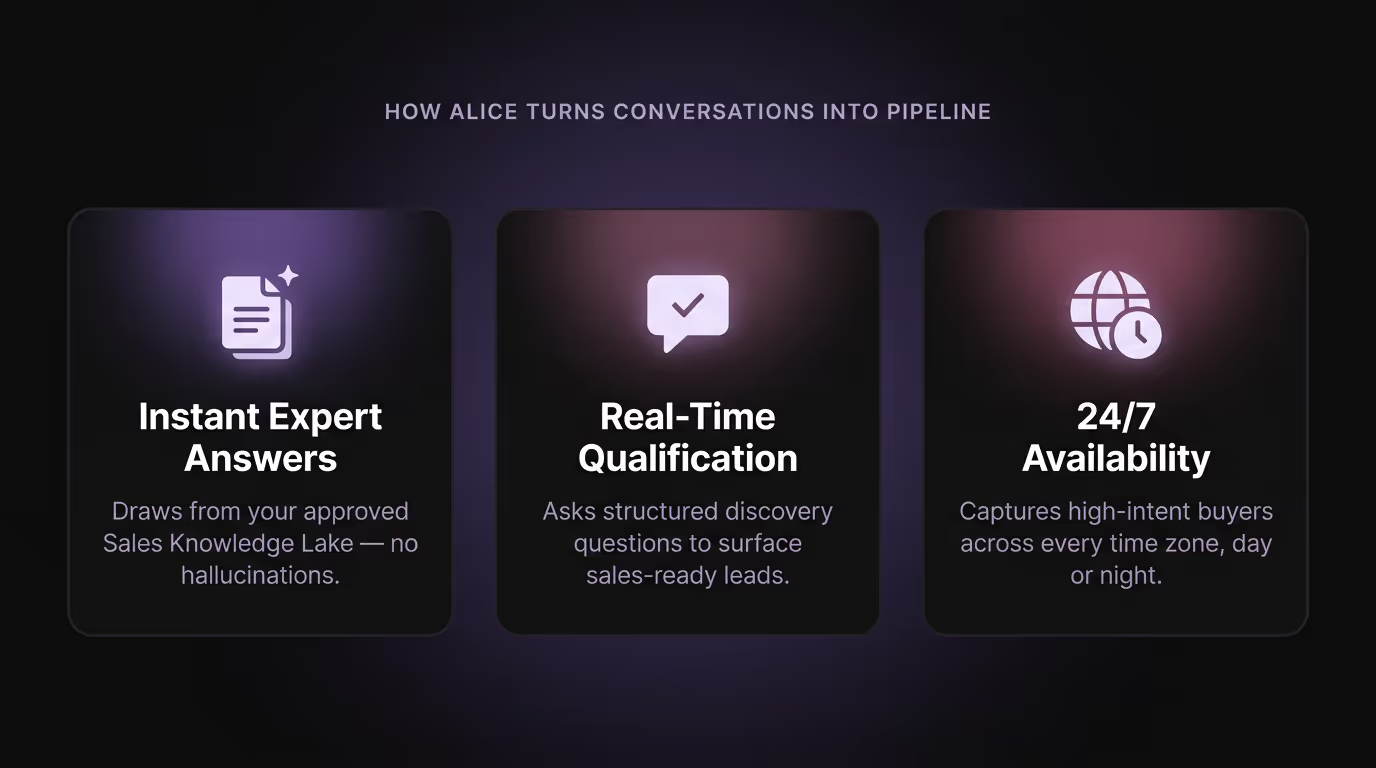
It is powered by Docket's Sales Knowledge Lake — the governed knowledge foundation that connects to your verified product documentation, case studies, security policies, and sales content. When the AI Marketing Agent answers, it draws from approved material, not generating plausible-sounding guesses.
By shifting the focus from lead capture to real-time engagement, AI Marketing Agents fundamentally fix the broken conversion funnel. They provide an immediate, valuable interaction that respects the buyer's time and intelligence. This approach does not just improve the user experience. It drives measurable business results, including a 15% increase in qualified pipeline and a 6% decrease in customer acquisition costs across Docket customers.
Docket's AI Marketing Agent is designed to engage the 98% of visitors who will never fill out your form. It acts as an always-on agent, ready to handle complex evaluation questions, qualify intent, and book meetings in real time, 24/7.
For too long, B2B marketing has been judged by vanity metrics like traffic and lead volume. In an era of declining conversion rates and increasing buyer sophistication, these numbers are misleading. They hide the profound inefficiency at the heart of most B2B websites.
The real measure of success is not how many people you can drive to your site. It is how many meaningful conversations you can have with them when they arrive. The demo-to-traffic ratio is a stark indicator of how well you are doing this. If your number is below 2%, it is a clear signal that your conversion model is broken.
Stop building a bigger funnel. Start building a better front door.
Docket is the Agentic Marketing platform for B2B revenue teams. Its AI Marketing Agent opens a real conversation, answers from your approved product knowledge, qualifies intent in real time, and delivers an AQL to your rep.